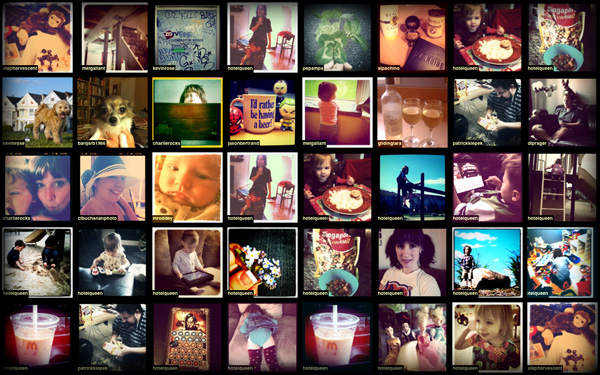
Aimed at the stars

Faced with the threat from it’s online competitors, Click&Go Holidays identified a critical disparity. While rivals boasted expansive online reach and ample budgets, their failure to deliver on promised customer service and comprehensive holiday offerings left dissatisfied customers in their wake. 

Moreover, their actions tarnished the online travel industry’s reputation, prompting a necessary intervention. In contrast, Click&Go proudly upheld its status as Ireland’s favoured online travel company, backed by an exceptional Trustpilot rating.

To highlight this advantage, we devised a campaign leveraging the company’s 5-star Trustpilot rating. Through visually striking, impactful creatives, the campaign not only reassured Click&Go’s clientele but also sowed seeds of doubt among those considering other online platforms for holiday bookings.

The creative executions allowed us to showcase aspirational locations, and are flexible enough to work across all the different types of holidays that Click&Go offer.

This campaign marked a notable departure for us due to budget constraints, making traditional photography and stock images impractical options. In response, we generated these visuals initially within Mid Journey, refining them further in Adobe Photoshop using the software’s dedicated Generative AI plugin.

The campaign is due to run during Q1 and will be on all of Clic&Go’s social media channels as well as online display and VOD.

Digital Out of Home – Are we being creative enough?

If you ask any creative they would say Outdoor, as I still call it or Out Of Home (OOH) as it is now called, is one of their favourite mediums. You’ll see any creative go weak at the knees at the prospect of creating an outdoor campaign. Why? Well this is high impact format that challenges us to think clearly, simply and distinctly. To convey a message that has to engage and be memorable in a few brief seconds. It often said in the business that if your idea works in outdoor it will work in any other medium.

OOH is evolving, it now embraces technology, hence the term Digital Out Of Home (DOOH). It is no longer just the static medium it once was. Technology has given it new life. For good or bad this has presented us with new and exciting challenges. I believe this brings us opportunities to create new and brilliant creative work and I also believe that the full potential of medium has not been fully realised in this market.

I’m sometimes disappointed to see DOOH sites regurgitating the print version of ads on digital screens or using 10 second cut downs of a TV ad that been retrofitted onto a DPOD.

By using DOOH like this, it feels like it is being used as an afterthought just to fill a space or to backup a campaign that was designed for other media. Surely we can do much better than wasting money and wasting opportunities for brands to have greater engagement and impact with their audiences?

DOOH now utilises a whole range of technologies, it’s a very rich medium. It can use motion tracking, heat sensing, facial and voice recognition, AI, AR, VR, video streaming and contactless payments. It can use real time data such as weather, time, traffic and shopping transactions. Messages can be updated in real time and geo-targeted. Or it can can display using something as simple as the humble gif. It’s integration with mobile give us countless opportunities to engage with audiences from sharing photos, dispensing products and vouchers to live streaming.

There are some great examples of creative and innovative DOOH from around the world, from the very simple to the more complex. Some of these use existing technology while others have had the tech specially created for them. This trend has been reflected in the past couple years at the Cannes Lions were it has its very own innovation category.

DOOH definitely involves more work than traditional OHH, particular on the technical side. I would not expect every person to be a technologist, but it always pays to keep your finger in the pulse with latest goings on in technology. It might be an obvious thing to say, It’s like any creative process, enjoy the challenge, have fun doing it, learn on the way and you won’t go far wrong.

My tips for working in DOOH.

The most important thing is still the idea:

No matter how good the technology is, if you do not have a good idea, it’s not going to work. It’s all well and good announcing you are first to market with new technology but if your idea is not engaging with your audience with a relevant message you are polishing a turd.

Research the technology:

You are not expected to know the exact detail of every piece of technology that available in DOOH. But keeping your finger on the pulse and researching what’s out there and helps you stay informed about what you can and cannot do. Collaborating with technologists, media specialists and outdoor suppliers at the earliest opportunity is very important. It will help them feel as part owners of the execution and get them excited about the project. There are people you can talk to in JCDecaux, PML and Exterion Media who all want to help. They all want good work on their showreels too. This will also reassure the client that you have done your homework and you know what you are talking about.

Stress test it over and over again:

We can sometimes get over enthusiastic about a piece of technology and loose the run of ourselves particularly when we get bogged down at ideation stage. I often find when tapping to the minds of technical people their enthusiasm naturally runs away with them and they go in to ‘nerd’ mode. It’s important to stop, check and remember to put yourself in to the shoes of who your talking too. The last thing on people’s mind as they go about their lives is your ad. Stress test the technology, and ask yourself will it engage your audience? If you are asking them to download an app – will they? Be your own worst critic. If it doesn’t work, make it simpler or bin it.

Location Location:

DOOH sites are now in a variety of locations, from roadsides to inside shopping malls. It’s vitally important to know where the location of your sites are and what your audience will be doing in those locations. There’s no point asking your audience to engage their mobile phones on a site next to major road.

Invent it yourself (or get someone too)

Sometimes you maybe fortunate to come up with an idea that involves creating a piece of technology that doesn’t yet exist. There is no harm pushing the boundaries of what can be done. With risk comes reward. The idea might be quite nebulous in your head, but this were research comes in again and finding the right people that will help it come to fruition. It’s the nature of tech people to love a challenge and they will generally pulls out all the stops to create something groundbreaking. At worst they’ll be honest and say they can’t make it happen. At least you’ll know where you stand before presenting it to the client. Take look in the area of tech start-ups and university labs, you might find the answer in the basement of Trinity College.

Examples of DOOH

Apotek Hjartat Blowing in the wind

HTTPS://VIMEO.COM/264556996

Women’s Aid #lookatme campaign

https://vimeo.com/122550922

British Airways – Magic of Flying

https://vimeo.com/122826929

Jetstar Dream Holiday Eye Tracking

https://www.youtube.com/watch?time_continue=52&v=ppC6Qh4CT4A

Mega shark attack at Southern Cross Station

https://www.youtube.com/watch?v=OjoMM7NvFog

Coca Cola – Bringing India & Pakistan Together

https://www.youtube.com/watch?v=ts_4vOUDImE

Norwegian Centre against Racism

https://www.youtube.com/watch?v=ijUYmOWlTZI

Netflix gifs Campaign

I love how clever and simple this campaign for Netflix is.

https://www.youtube.com/watch?v=gBy2Tz_pmKA

SWEDEN. WHERE GREAT HAPPENS (SOMETIMES)

There’s a wonderful attitude that permeates Swedish culture where there is a deep respect and enthusiasm for people who are bold and creative. Whether that is in engineering, science or the arts.

But they don’t seem to shout about it. They just seem to quietly get on with it and go off and create stuff and yet be hugely successful at it.

We can see this reflected in how much the Swedes have influenced the rest of the world. Of course, there was ABBA and where would we be without IKEA? Or premier car brands like Volvo and SAAB. H&M, handy for those Hawaiian shirts. Countless Nordic Noir TV shows like The Bridge and Wallander.

This quiet success appears to be happening in the advertising industry in Sweden, particularly in the last 10 years. Since I’ve been in the digital side of the business I have become very aware of their work. They were early adopters of digital and have constantly produced world class ground breaking work using technology to tell engaging brand stories.

We now see several Swedish agencies opening networks around the globe. All this from a relatively small market of 10 million people. Just this week arguably Sweden’s most creative agency Forsman Bordenfors has merged with KBS creating a new worldwide agency network.

Last week IAPI hosted Åkestam Holst, Magnus Jakobsson, one of Sweden’s most awarded Creative Directors and Karl Wikstrom, Senior Strategy Director. They talked about their working methods and spotlighted some of their most innovative campaigns. Interestingly none of the examples they presented were in traditional mediums and all of them used original thinking combined with innovative technology.

They spoke openly about their agency’s working model and how they believe they create such great work by investing in great people.

Three key rules for Åkestam Holst:

  • Have no hierarchies
  • Invite every creative to every brief
  • Apply next level niceness

These three beliefs lead to a workplace where everybody has an opportunity to contribute, a great idea can develop from anywhere and people have the freedom to fail. With equality, humility and hard work – anything is possible.

They talked about their 10 principles and used example campaigns to highlight how they put them to good use.

  • It’s a cliche but be brave.
  • Tell the stories no-one else is telling.
  • Attempt the unattempted – just because.
  • Don’t think campaigns. Think creative eco-systems.
  • Let people be themselves.
  • Listen to science but don’t let science run the show.
  • Smash taboos.
  • Create the safety to be brave.
  • Think of technology as a medium.
  • Create long ideas for a global audience.

HTTPS://VIMEO.COM/267985113 Reporters without billboards

HTTPS://VIMEO.COM/264641574 IKEA where life happens

HTTPS://VIMEO.COM/277079056 Social Beer

HTTPS://VIMEO.COM/264609191 Human Metal

HTTPS://VIMEO.COM/264644915   Voice of Change

HTTPS://VIMEO.COM/264643780   IKEA Pee Ad

HTTPS://VIMEO.COM/193364630   SAS we are Travellers

HTTPS://VIMEO.COM/264644904   Audio Safety code

HTTPS://VIMEO.COM/264607412   Apotek Hjartat Coughing Billboard

HTTPS://VIMEO.COM/264556996   Apotek Hjartat Blowing in the wind

They rounded off their presentation highlighting how Åkestam Holst aim to create genuinely exciting ideas, that are well executed, cleverly distributed and tell a bigger story. To them, that’s creating good. If you take a chance on brave and bold ideas some will succeed, some will fail, but that’s why they say “Sweden is Where Great Happens (Sometimes…)”

Of course with typical modesty they then challenged us to go out there and beat Sweden at Cannes next year.

Lycka till.

John Martin


Rise of the Bots

Being Human

At the start of the new year I thought it would be a good idea to have a look at recent and interesting developments, particularly in area of AI.

If you have been following the TV series Westworld, in one particular episode, two of the main characters are in deep conversation about the original concept behind the Westworld theme park. From the parks foundation,  the developers tried to find out how to get the Hosts (Robots) to come across as being ‘more human’,  in order to offer a better experience for the guests. Of course they found the best way was for them to learn was to interact with humans.

The hosts were then programmed to learn all the nuances, flaws, doubts, and emotions that make up being human. It wasn’t just about replicating human intelligence but human unintelligence. This in turn made them appear more human,  so over time the guests at the park couldn’t tell the difference between the humans and the hosts. Hence the hosts had passed the Turing Test.

The Turing Test

The Turing Test is named after the mathematician Alan Turing and is a test for behavioural intelligence in a computer, requiring that a human being should be unable to distinguish the machine from another human being by using the replies to questions put to both.

turing

In a way what is happening in the world of Westworld is happening right now – we’re not actually building sentient robots yet, but it’s getting there.

Little Critters

This year in particular we have seen the rise of the ‘Bot’ or ‘Chatbot’. These little critters are popping up rapidly on the messenger apps like Facebook Messenger, Kik, Wechat and Slack. They are being churned out at a rate of knots by over excited developers with over 11,000 out there and rising.

Nearly all the messenger apps are starting to invest heavily in the development of chatbots and are actively encouraging and challenging developers to take on chatbot projects and build their own. To make life easier for developers they are even offering ready made templates to get them started. The enthusiasm has been infectious and some brands have already been early adopters of the technology and have started to communicate and sell products and services to their customers via a chatbot.

Exciting times

dancing-bender-2

So why get all excited about chatbots? Well with more and more people using messaging apps than ever before, from a marketing point of view this is game changer. Anyone on a messenger app can now have a one on one conversation with a product, service or brand that uses a bot. With up to 2.5 billion people using messenger apps and growing it’s a massive audience and younger audiences are using message apps more than social media.

There are now bots for news, games, weather, fashion, booking holidays, financial advice and shopping. There’s even an influencer bot – so the human influencers had better watch out! There’s even a bot that can be your friend in case you have no human friends, the less said about that one the better.

Bots are not just being developed for messenger apps but for Smart Devices such as Google Assistant,  Apple Siri and Amazon Echo. Where the conversations are not limited to text but in audio and using voice recognition. Mark Zuckerberg recently showcased Facebook’s Jarvis project in his own home. Google setup ‘Google Brain’ 5 years ago and are actively pursuing an AI agenda,  particularly applying from what they have learnt from the development of Google Translate. Audi and Honda are also in the early stages of developing a bot for your car, or rather your car is a bot – think Knight Rider!

It’s trial and error and developers will admit they are on a very steep learning curve about getting the user experience right. In a lot of cases the conversations usually are basic, linear and structured with a very obvious list of pre-programmed questions and answers. That maybe the fault of some of the template options available. There are some bots out there were more thought has gone into giving them a bit of personality and therefore the conversation with humans appears more natural. Just interacting with a bot you get a good idea where this technology is going.

The challenge from a brand point of view,  is to create bots that will engage with customers on a conversational level, to be more of helpful and natural rather than trying to ‘robotically’ sell to you. This may sound easy, but it can be quite a challenge for creatives and developers to get the balance right in the brand bot / human relationship to create a good user experience.

However like Westworld, bot developers will tell you their long term plan is to have bots learn from interacting with humans (machine learning) and therefore appear more human and therefore create a better user experience.

Such is the rate of development, within 5 years you could chat with a messenger bot like you would with anyone of your friends or family, it will have a conversation with you based on your relationship with it. That conversation would have all the bonding, banter, slang, humour, and nuances that are involved in any dialogue between two people who know each other.

How people may feel about this kind of relationship and how it could be misused remains to be seen.
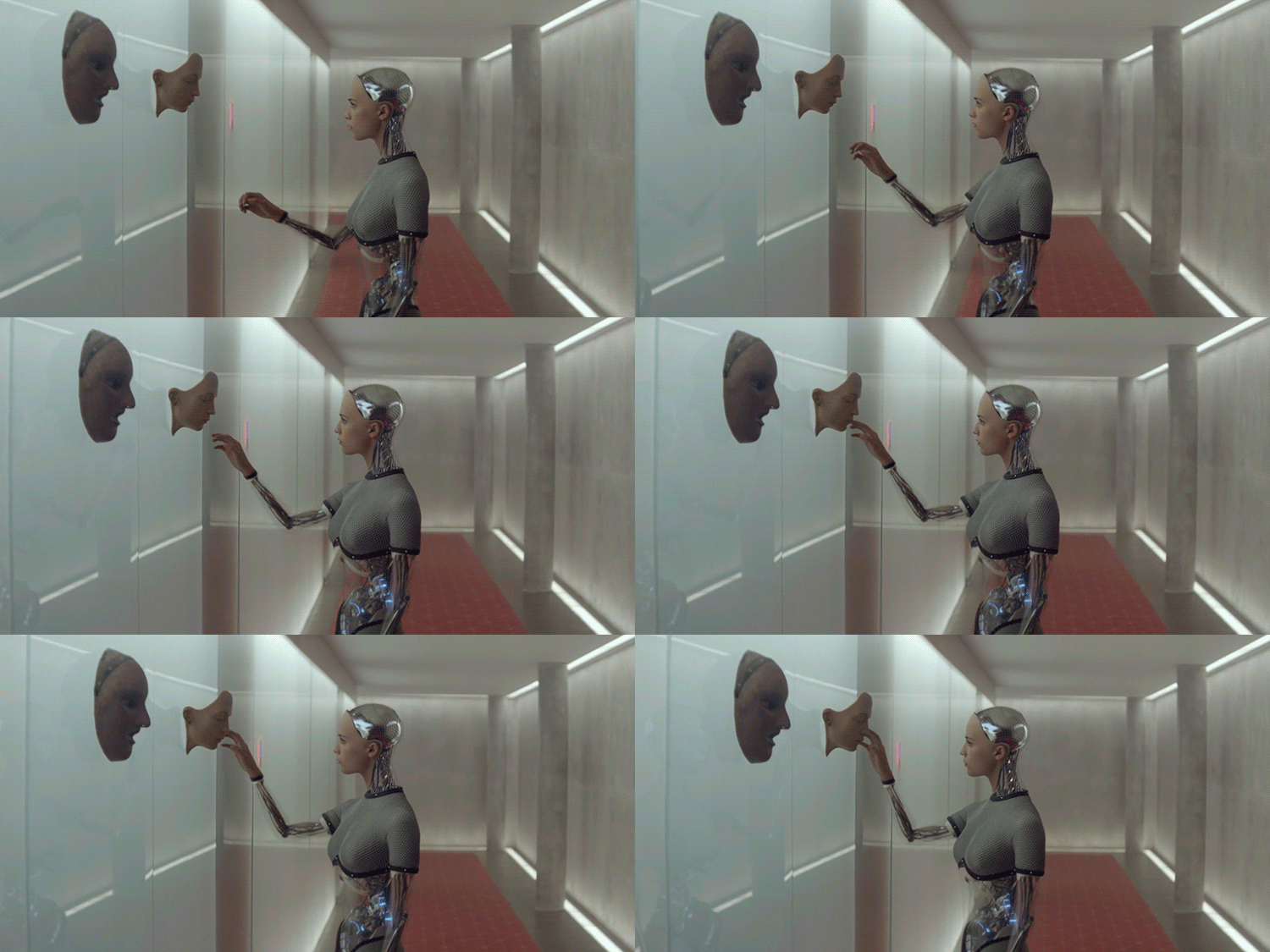
giphy

The development and application of this technology appear to be limitless and will have implications across business, politics and society. Experts have been talking about the fourth, (or fifth) industrial revolution, or the third wave of globalisation.

Maybe it’s ironic that the first AI to pass the Turing Test will be from a messenger app bot or from a smart device and not a supercomputer or Android. It looks like 2017 could be the year we see the rise of the bots.


What is it about Instagram?

Like many addicts I have been busily snapping away at almost most anything of interest or even things of no interest at all.

From shooting cute snaps of the family to taking highfaluting images of the seat covers on the bus, or moody reportage shots of chewing gum on the pavement, my iphone is nearly full of them. Why? Well like the 7 million other users Instagram addictiveness is probably down to a couple of things. One is its ease of use and the other it is social.

You can either select an existing photo from your camera roll or shoot a picture from Instagram itself. Once a shot is selected you have a choice of 16 filters to add effects to your shot. Some effects give a Polaroid style like 1977; others give a black and white graphic style effect like Gotham. Others randomly enhance the colours like Lomo-fi – which is my favourite.


You can also add in a ‘tilt shift’ effect that works really well with subjects shot from a height that makes everything look in miniature.

Once you’ve finished being all Robert Mapplethorpe, you can then share it with your friends via Facebook, Twitter, Tumblr and Posterous. You can also connect to Foursquare and it will allow you to geotag your shot and check in at the same time.

Some of the functionality is a bit clunky. More effect filters like a pop art effect or a mosaic effect would be a great addition. Better cropping, zooming and rotating tools would also be useful. For some reason rather than keeping the resolution of the phones camera it reduces it. I’m sure many users would like to print their shots, the quality at the moment isn’t really up to scratch.

On the up side, up 150 million shots have been upload to Instagram so far. Even a few celebs have got in on the act, Justin Biebre, Jamie Oliver, Snoop Dog and Rosie O’Donnell. There is a even Flickr group devoted to it with over 4 thousand members.

There is a daily photo competition. Anyone can enter by posting the #instadaily with their shot. Other ‘Gramers’ can then vote on who they think has the best shot of the day. There are no prizes, but plenty of kudos.

If you experiencing Instagram cold turkey you can always download a cool screensaver from Screenstagram for you computer (Mac only I’m afraid) and you can watch your follower’s shots all sliding around on the screen together.